How many voices were you listening to before you left the house today? Between our phones, the news, the voices in our own minds and everybody’s opinion on everything, it’s a noisy world, and it isn’t always easy to tell which voices are worth listening to.
Tag Archives: bible
St. Luke’s Day (Luke 10:1-9)
“Give thanks to the LORD, for he is good. His love endures for ever.” (Psalm 136:1)
As we celebrate 150 years of St. Luke’s, let’s give thanks for God’s goodness in helping many people find love, support and the good news of Jesus Christ over many decades. Let’s praise him for the work and ministry of the people that make up St. Luke’s church and have continued his mission to share the good news in word and deed and let’s rejoice that his love does indeed endure for ever.
This Sunday 18th October 2026
This Sunday St. Luke’s celebrates its 150th anniversary. We’ll be having a special service with a guest speaker, Nick Williams, from our patrons, the Church Pastoral Aid Society. There will be gifts to give out, a special collection for the work of the church and a free celebratory lunch. If you are out of the habit of joining us on a Sunday, this would be a great Sunday to return – we’d love to see you again!
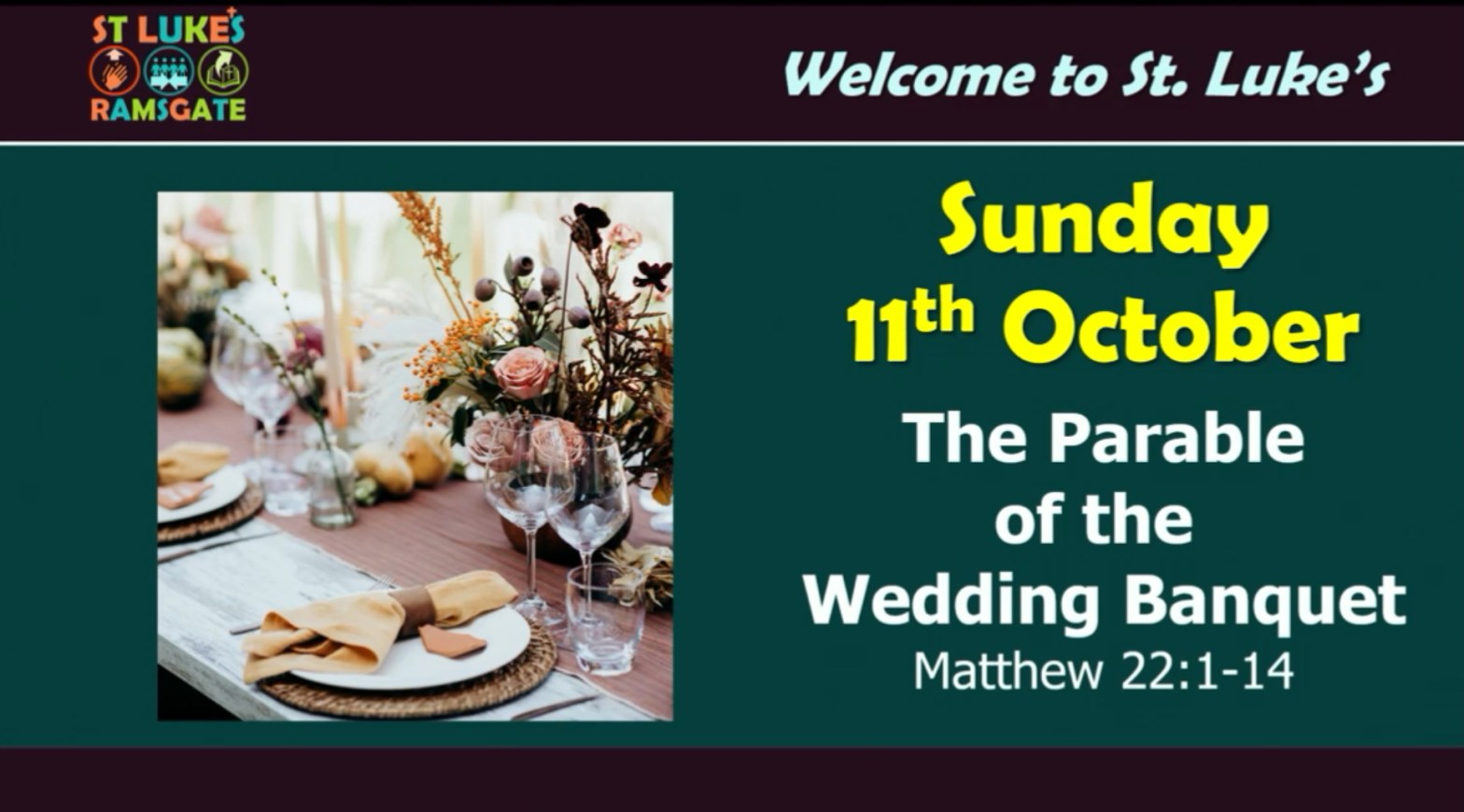
The Parable of the Wedding Banquet (Matthew 22:1-14)
“Come, all you who are thirsty, come to the waters; and you who have no money, come, buy and eat! Come, buy wine and milk without money and without cost.” (Isaiah 55:1)
We finish our series on the Parables in Matthew’s gospel with the Parable of the Wedding Banquet.The invitation to the banquet is free to all. Accepting it is transformational.
This Sunday 11th October 2026
The sad truth is that most people live their lives ignoring or avoiding the invitation. They work hard to achieve satisfaction in life without God, through careers, relationships, possessions, achievements, family or whatever. In their thinking there is no time to accept God’s free invitation, because they are too busy working for other things.
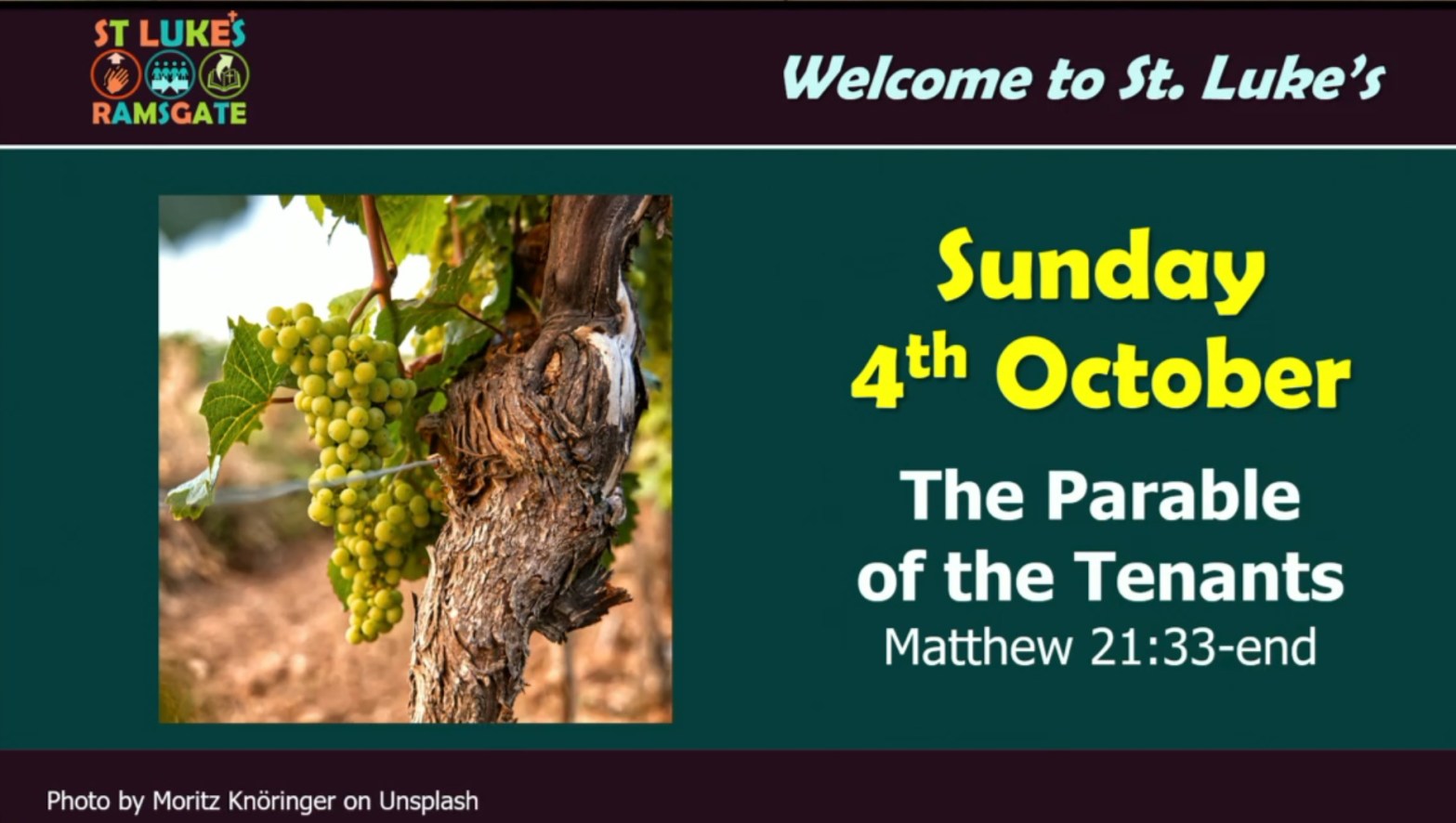
The Parable of the Tenants (Matthew 21:33-46)
“The stone the builders rejected has become the capstone;” (Psalm 118:22)
In 33AD, Jesus was in Jerusalem debating with the heavy-weight Jewish authorities. In that debate, Jesus told them a story about a vineyard, whose tenants refused to pay rent to the vineyard owner. It was obvious that the story was a thinly veiled criticism of the temple authorities. Jesus was publicly accusing them of failing to do what God required. Yet, what hope did Jesus, a poor Jewish Rabbi from the backward region of Galilee, have of making a difference against the powerful temple elite?
The events of the following days seemed to give an answer. In worldly terms Jesus had no hope. In the following days, they arranged for Jesus’ arrest trial and execution. Their critic was dead and buried. Or so they thought.
The truth was different. What they should have seen from Jesus’ teaching and miracles was that this was no ordinary Rabbi. This was God’s Son. They should have accepted his criticism and started to behave as God required.
Yet, this was not the end of the story. Although Jesus was brutally rejected by them, he was resurrected by God and became the capstone for a new living temple, the church, which would transform the world.
This Sunday 4th October 2026
We love stories where the seeming underdog does surprisingly well.
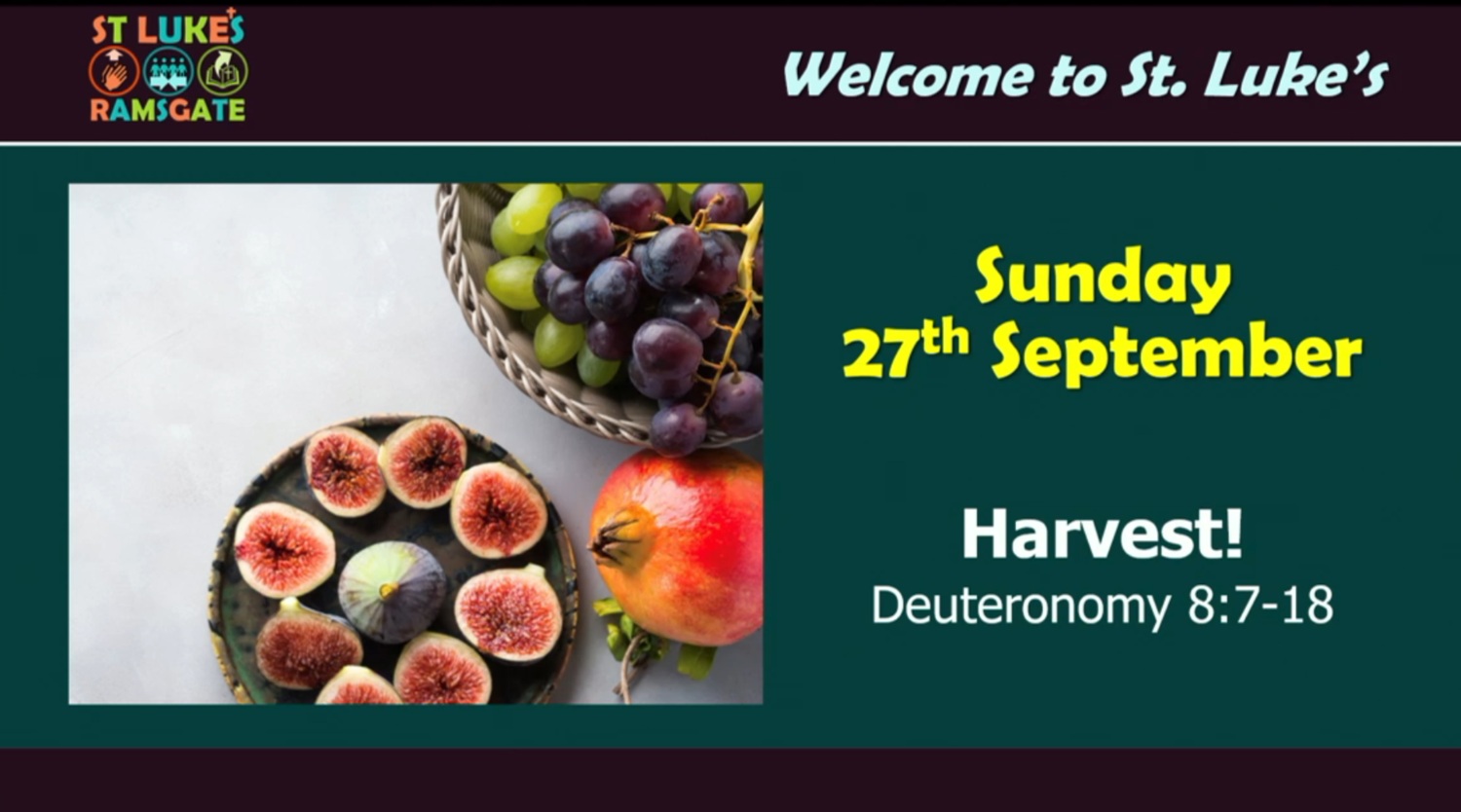
Harvest! (Deuteronomy 8:7-18)
“Do not be afraid, little flock, for your Father has been pleased to give you the kingdom.” (Luke 12:32)
This week we’re looking at Deuteronomy 8 as we celebrate Harvest.
This Harvest Sunday 27th September 2026
If your season right now looks more like waiting in the desert than enjoying abundance, know that God is doing more than you can see.
The Parable of the Vineyard Workers (Matthew 20:1-16)
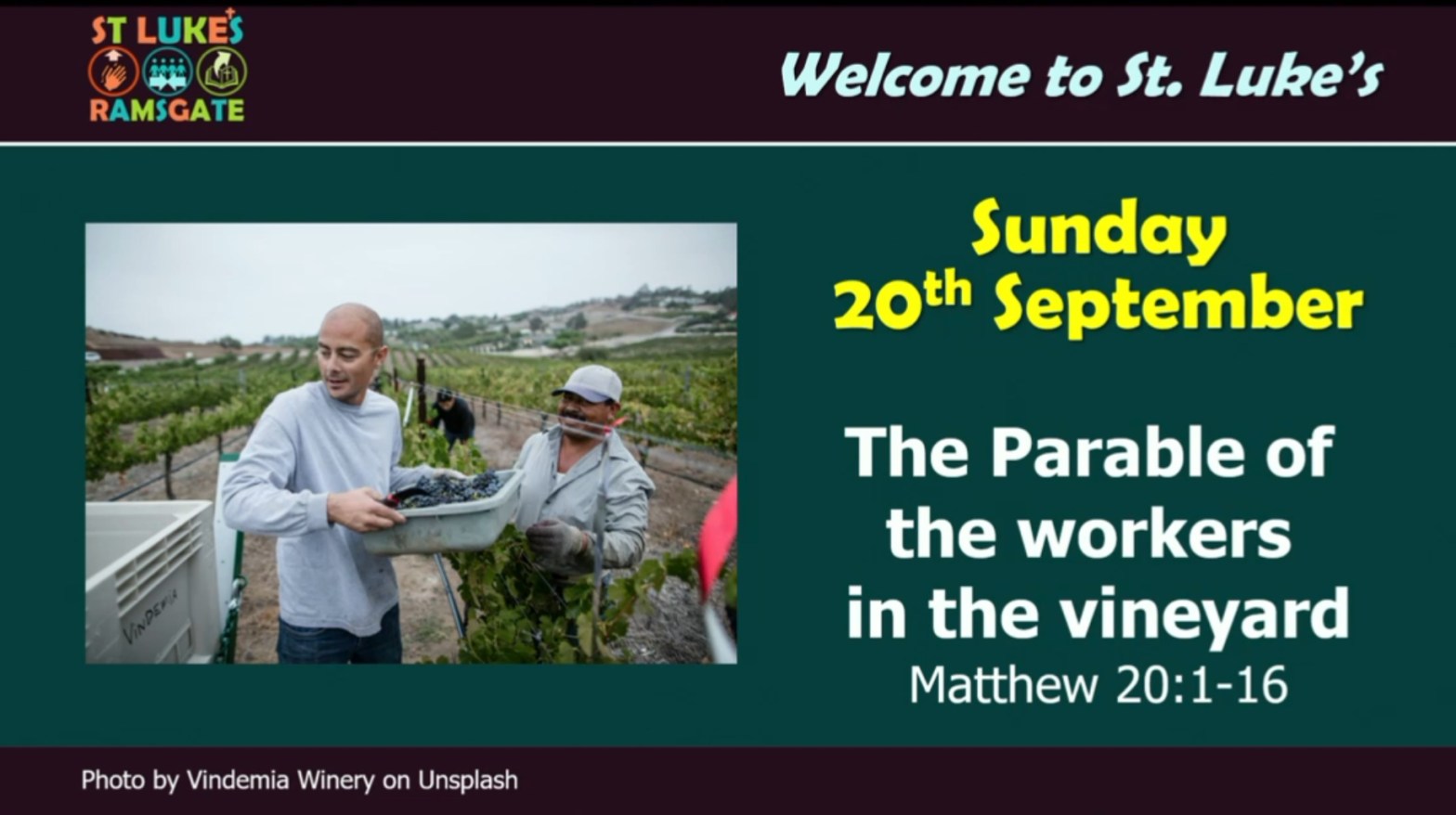
“For it is by grace you have been saved, through faith—and this is not from yourselves, it is the gift of God— not by works, so that no one can boast.” (Ephesians 2:8-9)
Our focus this Sunday is another of Jesus’ Parables from Matthew’s gospel that focuses on the meaning of grace.

