The Easter Story is an emotional rollercoaster. It takes us from the depths of human cruelty and agony to the highs of the most incredible and hope-giving miracle.
Tag Archives: faith
Palm Sunday (Matthew 21:1-11)
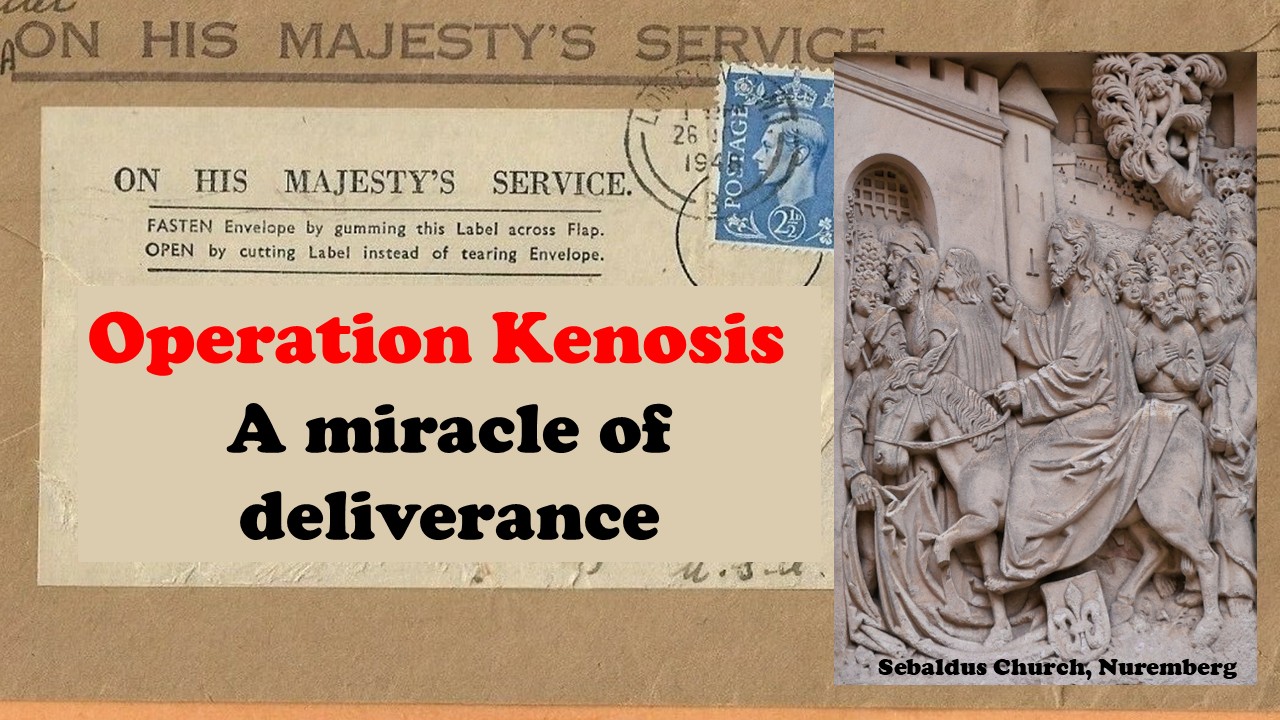
“Rejoice greatly, O Daughter of Zion! Shout, Daughter of Jerusalem! See, your king comes to you, righteous and having salvation, gentle and riding on a donkey, on a colt, the foal of a donkey.” (Zechariah 9:9)
This Sunday is Palm Sunday. We remember Jesus on a journey into Jerusalem. He, like many Jews, was on a pilgrimage to Jerusalem from his home region of Galilee. Yet, he chose to arrive in Jerusalem deliberately announcing to the crowds that he was coming to be made king. He rode on a donkey in fuflilment of the prophecy in Zechariah.
The crowds, many of whom had witnessed his amazing preaching and astonishing miracles, responded by praising him and laying down branches along the path, symbolically welcoming him as their king. Yet, remarkable as this was, difficult questions remained. How could Jesus be enthroned when he was not welcomed by the temple authorities? (They were jealous of his popularity and angry at his criticism of them). And how could Jesus overthrow the military power of the Romans who occupied the city?
Yet, within a week, Jesus was crowned and declared to be king. At his crucifixion, a crown of thorns was placed on his head and a placard placed above him declaring him to be, “King of the Jews.” To most this looked like the authorities mocking his claims, but the deeper reality was that his claims were becoming true in ways people could not comprehend. On the cross Jesus became king of God’s eternal Kingdom, as his subsquent resurrection proved.
This Sunday- 29th March 2026
As part of her preparation to be enthroned as Archbishop, Sarah Mullally chose to walk a 72 mile pilgrimage from St. Paul’s, Cathedral in her previous Diocese of London, to the Cathedral church of her new Diocese in Canterbury. One thing she didn’t do was ride a donkey!
Peace (Philippians 4:2-9)
“Blessed are the peacemakers, because they will be called children of God.” (Matthew 5:9)
When Paul writes about ‘the peace of God’, he does so in the context of urging Christians in the Philippian church to stop arguing (Philippians 4:2-3). In other words, Paul recognises that it is easier to find peace with each other, when we have first grasped the peace of God in our lives. Indeed, relationship breakdowns and even wars often arise out of contexts of deep anxiety.
To be a peacemaker, is to follow Christ’s example. He came to die for us, so that we could have peace with God. But also to be a peacemaker requires us to be free from anxiety, to not just have peace with God, but also the peace of God in our lives. Out of that God given peace we are equipped to work for peace.
This Sunday- 22nd March 2026
How can we find inner peace in a world of war and sickness?
Love (1 John 4:7-12)
“This is love: not that we loved God, but that he loved us and sent his Son as an atoning sacrifice for our sins.” (1 John 4:10)
This weekend is Mothering Sunday, when we celebrate and give thanks for the love of our mothers. The relationship between a mother and her child is perhaps the strongest of all human bonds, forged as it is in nine months of pregnancy, the pain of childbirth itself and the intimate care of a newborn child. It is a relationship marked by a sacrificial gracious love.
Much of this mirrors God’s love for us. Out of love, he sent His Son to die for our sins and out of love he offers us the gift of forgiveness and eternal life.
So, let’s give thanks for our mothers and their love, whilst also remembering God’s love for us. As we do so, let’s learn to love others in the same way.
This Mothering Sunday- 15th March 2026
This weekend is Mothering Sunday, when we celebrate and give thanks for the love of our mothers.
Fruit of the Spirit – Joy(Psalm 100)
“Rejoice in the Lord always, I will say it again: Rejoice!” (Philippians 4:4)
How can you tell someone is a Christian? Jesus says, “by their fruit you will recognise them” (Matthew 7:16) and a key characteristic of the fruit of the Spirit is joy. So shouldn’t joy be a key sign that someone might be a Christian? At last Saturday’s confirmation service, there was a palpable sense of joy, especially among the candidates as they publicly declared their faith in Jesus. Joy often is a mark of Christians.
How do we cultivate this joy? By focussing on our reason for joy. By gathering together to praise God and celebrate what he has done for us in Jesus.
This Sunday- 8th March 2026
But how can we maintain our joy? Is Paul’s command to, “Rejoice always!” realistic?
Fruit of the Spirit (Galatians 5:13-26)
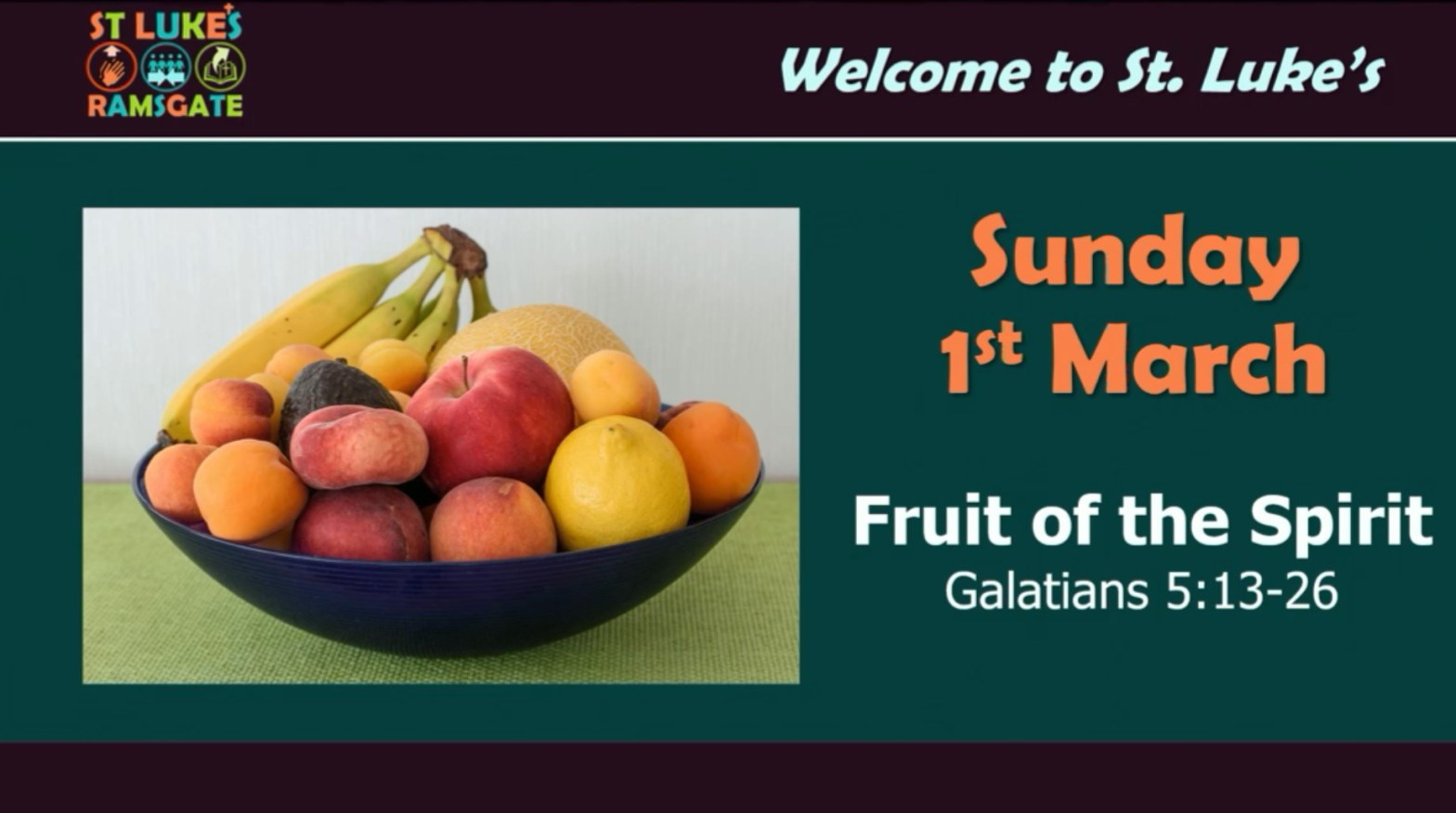
“Since we live by the Spirit, let us keep in step with the Spirit.” (Galatians 5:25)
Last week, we looked at the two humanities on offer. The one rooted in Adam’s disobedience to God in the Garden of Eden and the other rooted in Christ’s obedience to God in the Garden of Gethsemane as he expressed his willingness to die on the cross as a sacrifice for our sins. We now have the option of continuing to live simply in the old way as a descendant of Adam and his disobedience, or by faith in Christ as those reconciled to God and assured of his forgiveness.
Join us this Sunday as we introduce our new series on the Fruit of the Spirit.
 St. Luke's Church Ramsgate