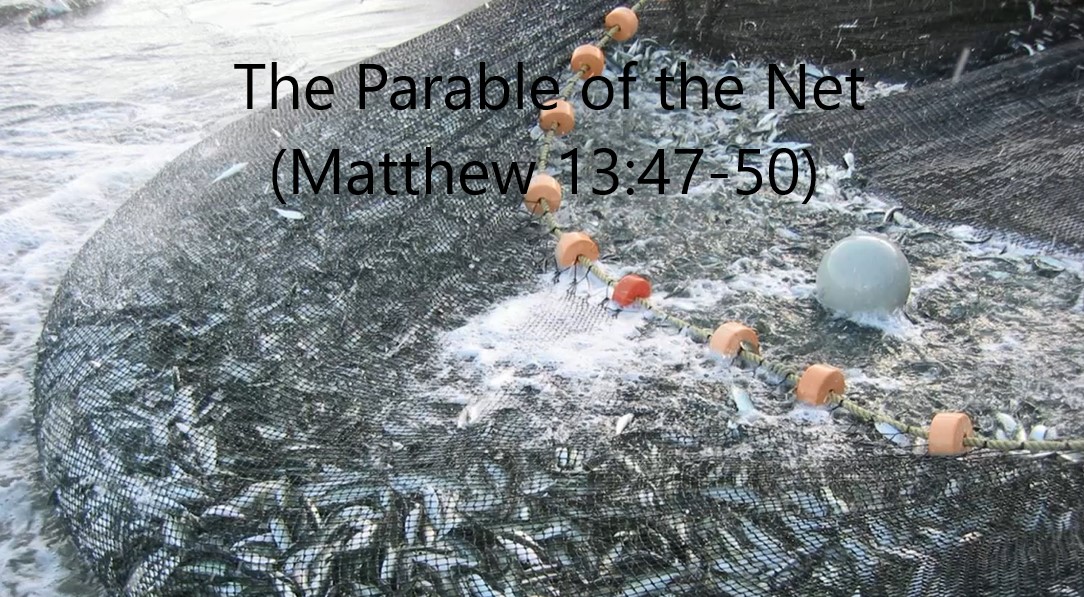
Jesus often talked about judgment, and in Matthew 13:47-50 He talked about the terrifying place prepared for bad people at the end of the age. But how will He decide who is good and who is bad? Will the dividing line He uses be reasonable or arbitrary? This sermon reflects on that question. We’re probablyContinue reading “The Parable of the Net (Matthew 13:47-50)”
Author Archives: Andrew Gillham
Investment for Joy (Matthew 13:44-46)
Due to technical issues this week the service recording failed, below please find the sermon text. Investment for joy This week I have encountered several things that have made me reflect on what it means to invest and sacrifice for the experience and reality of real joy. Often with things that are worth it, timeContinue reading “Investment for Joy (Matthew 13:44-46)”
Wheat and Weeds (Matthew 13:24-30, 36-43)
Wheat and Weeds – A Parable about Judgment On the face of it, this parable is quite straightforward (although I wonder what they’d say on Gardeners Question Time). It’s about judgment. You may be more inclined to convert the weeds, and turn it into a parable about evangelism. Jesus certainly talks about conversion elsewhere, butContinue reading “Wheat and Weeds (Matthew 13:24-30, 36-43)”
Insignificant Beginnings(Matthew 13:31-33)

Jesus and his apostles might seem to the world as an insignificant beginning but Jesus’ parables today hint that the insignificance will be significant indeed.
Kingdom Secrets (Matthew 13: 10-17, 34-35)

Talk on Kingdom Secrets from Matthew 13
What’s in a story? (Matthew 13: 1-9, 18-23)
Today, we’re beginning a series on the parables of Jesus, found in Matthew chapter 13, and each week will be looking at a different part of this chapter, and seeing what we can learn about God and his kingdom and his love for us.
Give Thanks (Exodus 17:1-16)

Colin Gale reflects on two “ancient, slightly weird” stories of God’s gracious provision for human life.
Are we Satisfied? (Exodus 16:2-15)

This might not be a question you’ve ever asked yourself, but we don’t have to look far in the news or on social media to see examples of dissatisfaction.
Beyond the Red Sea (Exodus 14:10-31)

Interpreting Bible stories can be challenging. The author simply tells the story and doesn’t tell you what its relevance might be for future generations. The crossing of the Red Sea was an unforgettable event for those who were there, but what might it be saying to us?
God acts (Exodus 11:1-10)
Pharaoh did not listen to God, through Moses and Aaron approaching him and saying ‘Let my people go’.God had sent warnings to Pharaoh of the consequences of not obeying a simple instruction – there were already nine plagues that had grown in severity and destruction, and the tenth plague bought a warning of death.
 St. Luke's Church Ramsgate