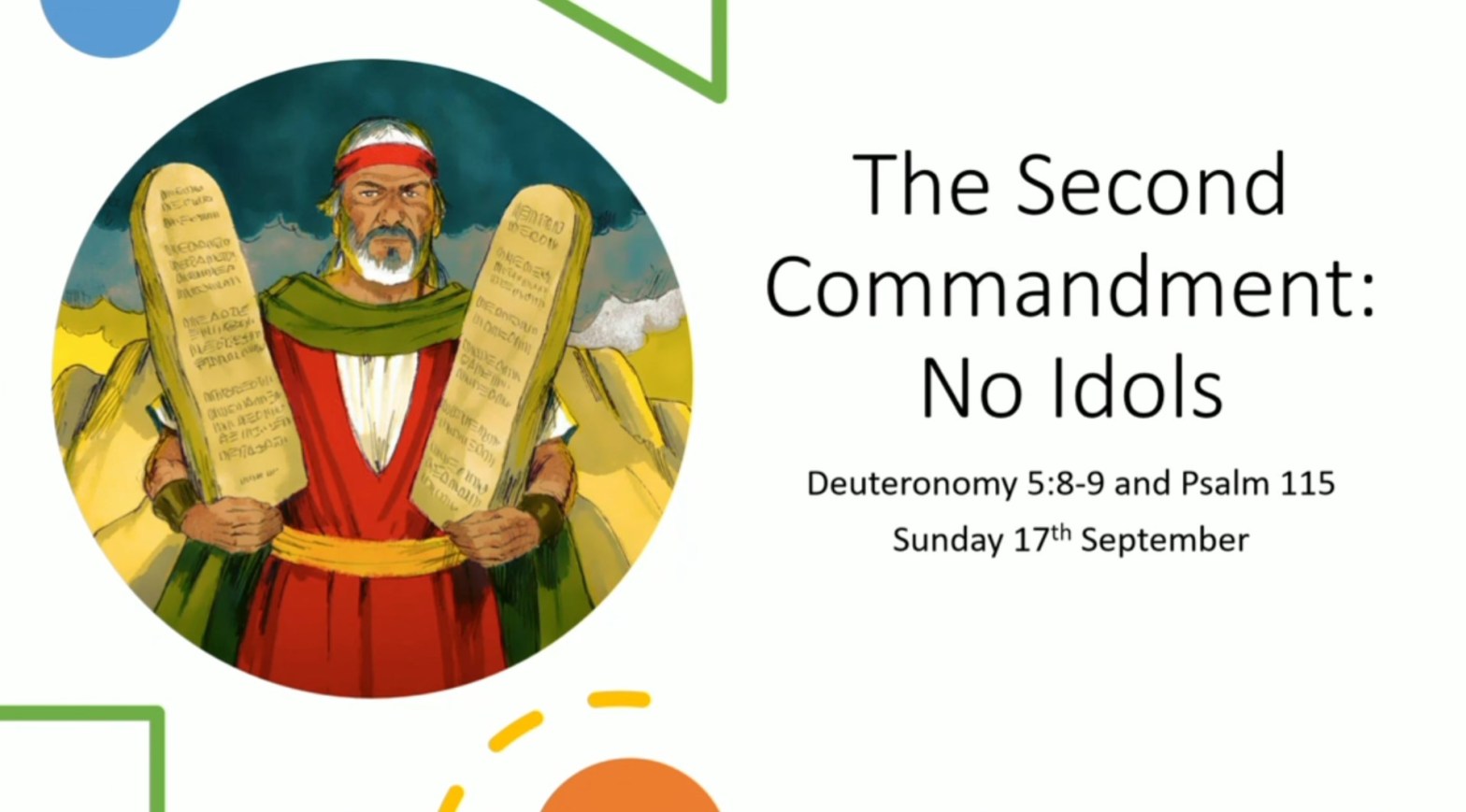
‘Idols’ are man made constructs that replace the one true God in our lives. In ancient times and in parts of the world today, these were statues made to be worshipped. The religion and superstition linked to them became a tyranny. The ideology claimed, that unless you appeased these gods in some way, you would be cursed. People became enslaved to gods that were not gods at all.
The Lion, the Witch and the Wardrobe
One of C.S. Lewis’s most famous books is the children’s book, the Lion, the Witch and the Wardrobe. It was the first in a series of stories about Narnia and has been made into films and TV series. Apparently, Netflix have also recently commissioned a TV adaptation of the story.
In the book, the land of Narnia is under the control of The White Witch, who calls herself the Queen of Narnia. Her rule, however, brings winter to the land and fear and oppression. Perhaps the book set during World War II and written soon after is deliberately echoing the Nazi occupation of Europe in this description.
Yet, in the story, like in Nazi occupied Europe, there is resistance to the oppressive rule. In particular when the children enter the land through the cupboard, they are helped by a faun and beavers to escape the clutches of the White Witch despite the danger they bring to themselves. Just as some in Nazi occupied Europe sought to help Jewish people despite the threat from the Nazis. In both cases, evil rulers were resisted by those seeking to do good.
Holy Resistance
The Lion, the Witch and the Wardrobe echoes a lot of Christian themes. But perhaps this theme of resistance to an evil oppressor is one that is often missed.
The Bible understands the world to have been created good, but since people have rejected God, it has come under a kind of occupation of evil. So much so that Jesus, can even talk about the devil as being the ‘prince of this world.’
But Jesus came to rescue us from the oppressive rule of the evil one. Talking about his imminent death on the cross, he says:
“Now is the judgment of this world: now shall the prince of this world be cast out.” (John 12:31)
On the cross, the power of the devil has been defeated, the occupation is coming to an end. But while we wait for his final downfall, we still live in a world, where his evil influence is at work. As followers of Jesus, we are called to a Holy Resistance.
Peter puts it this way:
“As obedient children, do not conform to the evil desires you had when you lived in ignorance. But just as he who called you is holy, so be holy in all you do;” (1 Peter 1:14-15)
Last week, we saw that the Ten Commandments were rooted in the story of God’s saving work. The introduction to the Ten Commandments says,
“”I am the LORD your God, who brought you out of Egypt, out of the land of slavery.” (Deuteronomy 5:6)
Having rescued Israel from the oppressive rule of Pharaoh, the King of Egypt, God is now calling them to live as his people, in a way that resists the evil oppressive forces that shaped those who had enslaved them. The Ten Commandments are a call to Holy Resistance. A recipe to avoid being enslaved again to the forces of evil that so corrupt God’s good world.
The first commandment was to keep the God who rescued them as the main focus of their worship, whilst the second commandment was not to make any idols. Not to make any physical representations either of the true God who rescued them or the false gods of the peoples around them.
This was an utterly radical idea in the Ancient Near East. At the time, the world was full of idols, both in Egypt, where they had come from and in Canaan where they were heading. To not create a physical object to worship, not even of their own God was a radical act of Holy Resistance to the ways of their world.
This meant that when other nations visited, the Israelites, they were astounded that they could not find an image of any god in their homes or temple. In their eyes, the god of the Israelites was missing.
The result was, as Psalm 115 makes clear in verse 2, that Israel were mocked, for having an ‘invisible God.’
The Problem with Idolatry
So, what was wrong with idolatry? Why did the God who rescued them from Egypt command that they make no images to worship, not even those that represented him.
Well God had rescued them from slavery in Egypt. He did not want them to return to any form of slavery and the problem with idolatry is that it takes away your freedom, it dehumanises you. As the Psalm puts it in verse 8, in some way it makes you like the idol that you worship:
“Those who make them will be like them, and so will all who trust in them.” (Psalm 115:8)
The word, ‘like’ here is an echo of Genesis 1, where God says, that he is going to make humans in his image, in his likeness. To be truly human is to be like the God, who created the universe, but when the focus of your worship, becomes something created by humans, you end up becoming something far less than you were made to be.
The Psalm puts this brilliantly, mocking the idols made by man as being, completely useless. They may have bodily parts, but none of them work. They cannot hear, see, feel, smell or move. They are as good as dead.
Many writers point out, that the people of the Ancient Near East did not really worship the statues, they only saw the statues as representing the gods. But how can something made by human hands ever represent anything other than something made up by humans. The idea of the gods, their stories, images and powers, were as much a human creation as the statues themselves. They had no more power than the imaginative force of other humans.
Indeed, they were often invented by humans as a way of controlling other humans. They were a form of slave making, controlled by priesthoods made rich, by the offering of the people who worshipped their gods.
But worshipping something invented by other humans is to become blind to the God in whose image we are made. To become less than human.
Loss of Heaven
First of all there is a loss of heaven. The Psalm talks of the LORD as being the God in heaven, the one who does whatever pleases him.
He is not controlled by people on earth, he cannot be represented by any image on earth. He is in heaven, above and beyond this world, transcendent above the immediate issues and concerns of humanity.
Stefani Ruper, was an atheist that realised that people need to engage in spirituality to be truly whole. But she was an atheist. She did not believe God existed. So, she tried to write books on spirituality for atheists. However, having done so she came to a conclusion that such attempts of spirituality without acknowledging the transcendent God just did not work and she became a Christian.
When we worship manmade gods or simply manmade ideologies that reject the idea of god, we lose our sense of heaven.
Loss of Eternity
We also lose our connection with eternity. God is eternal, but our lives on this earth are finite. One day we will die. The Psalm talks about the dead going down to the place of silence.
For worshippers of idols, which merely reflect the temporary work of human hands, or ideologies, which are human ideas that come and go, their worship is of something finite. Idols do not last, ideologies do not last. Neither offer any hope in the face of death.
But the God of the Bible is eternal. He is always there and when we see our role as praising and glorifying him, as the Psalm suggests, then we discover our eternal role and so find eternal life through our trust in the one who can save us even from death.
Loss of Life
The gods and idols of the ancient world were just inanimate objects, no more alive than the materials they were made from. The human made ideologies behind them were equally dead, just as human ideologies are today, mere fantasies, that lose all power, when no-one believes them anymore. They too are dead. If you trust in them, then you are just as dead.
But the God of the Bible is before us and beyond us. He is the alpha and omega. He is not a figment of our imagination, but we are created by his word and sustained by his will. Our life is utterly dependent on him and only when we turn to him do we become truly alive, truly human.
As Paul said of the Thessalonians:
“They tell how you turned to God from idols
to serve the living and true God,” (1 Thessalonians 1:9)
Idols of our Age
In the Twenty-First Century West we do not create images as representatives of gods, but we do replace worship of the living and true God, with the worship of human created things and ideas.
This is particularly true in our secularised world, where God is completely pushed out as irrelevant to life. The focus is completely on material man made things, ideologies and concerns. Just as the idolaters of the past, we lose our connection with heaven or the transcendent and eternity. We end up imprisoned in a world limited to immediate material concerns and become dehumanised as a result.
So what are some of the idols of our age?
- Wealth –
The New Testament, explicitly names greed as a form of idolatry:
“Put to death, therefore, whatever in you is earthly: fornication, impurity, passion, evil desire, and greed (which is idolatry).” (Colossians 3:5)
Jesus, pretty much names Money as a replacement for God,
“”No-one can serve two masters. Either he will hate the one and love the other, or he will be devoted to the one and despise the other. You cannot serve both God and Money.” ( Matthew 6:24)
Greed or money has become one of the dominant idols of our age. The stories we are told in the constant advertising of our world, is that if we have better stuff or buy more experiences, then we will be happy in life. It seems appealing, but we often end up enslaved to this power, working harder and harder to have more and more, but never really finding the promised happiness. Doesn’t the promise of having more often prove faithless? Doesn’t the simple accumulation of stuff become soul destroying? It offers no hope in the face of death and no connection with ultimate meaning or reality.
- Fame – Then there is fame. Many people today, long to be well known and well liked. Social media feeds this, we count the number of our followers, long for ‘likes’ for our posts. Apparently 1 in 5 youngsters in the UK dream of becoming social media influencers. A few such influencers have gone from obscurity to find fame and fortune through social media. Their stories inspire others to hope for the same. But, yet again this alternative power is oppressive and slaving, pulling us to be constantly attached to our phones and basing our hope and value on how people respond to our posts. We long to be loved by others, but even if we manage to make people like our social media image, deep down we know that they are not loving the true me. No wonder, we have a mental health epidemic.
- Heart Desire – The third power or god of today is the inner self. Many people when wondering what to do are asked, ‘What does your heart say?’ Stories about ‘learning to follow my heart’ rather than being ‘enslaved’ by the views of others around suggest a kind of freedom. But is the ‘heart’s desire’ a better authority than the God who saves? Aren’t we then just enslaved to our inner desires, which are often twisted and corrupted by the attitudes of the people around us. Is our heart really as trustworthy a leader as the living and true God, who has a steadfast love and faithfulness.
- Success – A fourth idol is running after success. We think that what counts in life is achieving something, meeting some measure. It can be becoming a successful sport person, business leader, parent or even church. Everything is geared towards making what we do successful, becoming our ultimate goal in life. But
Even our church life can become caught up in running after the idol of success, whether it be achieving the restoration of a building or growing the church into vast numbers. When celebrating our success replaces worshipping our God, then the success has becomes all important and we become too focus on the present world and lose touch with eternity and heaven. We are often driven to work hours that are too long, wearing ourselves out and again it can be soul destroying.
Not that success, the desires of our heart, fame or money are bad things in themselves. The Psalmist seeks God’s blessing and such a blessing may well give us these things and more. The problem is when these things become what drive our lives, when they replace our relationship with the living and true God and imprison us in an outlook constrained by the immediate present world and cut off from the eternal.
Lots of good things can become idols in the same way, family, relationships, volunteer work and so on. The anti-dote is holy resistance. A constant guarding of our hearts, to turn them away from these idols and to focus once more on who God is and to wonder about his transcendent nature.
Holy Resistance
This is Holy Resistance, because it is not the way of the people around us, whose lives are driven by these things and for whom God is absent in their lives. But the more we resist the culture of the world around us, the more we may shine light into their worlds, of a better way. A way of life and freedom as we become the people of God.
In the Narnia stories, when the White Witch is defeated, winter is over, the land is released from its grasp.
The Nazi hold on occupied Europe was released and the people were free from its power.
When we live lives of holy resistance today, not allowing the idols of our world to drive our lives, we are those looking forward to the end of the winter of idolatry, to the end of evils occupation to the time, when Christ’s rule will be fully realised and we will have life to the full.
 St. Luke's Church Ramsgate